If you have ever finished a long workday with a stiff neck, tight shoulders, or an aching lower back, you have felt the effects of posture firsthand. Many adults accept these discomforts as a normal part of modern life, but they are often signs that your body is asking for a change. The good news is that posture is not fixed. With the right knowledge, daily habits, and professional support, most people can improve how they sit, stand, and move.
This complete guide to understanding posture correction explains what good posture really is, why it breaks down, and what you can do about it. Whether you spend your days at a desk, behind the wheel, or on your feet, you will find practical steps you can start using today.
Understanding Posture: Why It Matters More Than You Think
Posture is simply the way you hold your body, both while moving and while still. Good posture means your joints, muscles, and ligaments share the workload of supporting you evenly. When you stand well, your ears sit over your shoulders, your shoulders over your hips, and your hips over your ankles. The spine keeps its natural curves: a gentle inward curve in the neck, an outward curve in the upper back, and another inward curve in the lower back.
When posture drifts away from this alignment, some muscles work overtime while others weaken from underuse. Over weeks and months, that imbalance can show up in several ways:
- Neck pain and tension headaches
- Upper back and shoulder tightness
- Lower back pain
- Reduced flexibility and range of motion
- Fatigue, since inefficient posture demands more energy
- Jaw tension and discomfort
The head alone weighs roughly ten to twelve pounds. For every inch it drifts forward of your shoulders, the strain on your neck and upper back increases substantially. This is why "tech neck," the forward head position that comes from looking down at phones and laptops, has become such a common complaint.
Posture also reflects more than muscles and bones. Stress, mood, sleep quality, and even breathing patterns all interact with how you carry yourself. Slouching can limit how fully your ribcage expands, which may leave you feeling more tired or tense. Looking at posture as part of your overall wellness, rather than a cosmetic issue, is the first step toward lasting change.
Common Causes and Misconceptions About Poor Posture
Before starting any correction plan, it helps to understand where problems begin. Poor posture rarely comes from one thing. It usually develops from a combination of habits, environment, and past injuries.
Common causes include:
- Prolonged sitting. Many people in O'Fallon and across Illinois spend hours at desks or commuting. Sitting for long stretches tightens the hip flexors and chest while weakening the glutes and upper back muscles.
- Device use. Looking down at a phone or tablet pulls the head forward and rounds the shoulders.
- Weak core and back muscles. Without enough support from the muscles around the spine, slouching becomes the path of least resistance.
- Previous injuries. Whiplash, sports injuries, or falls can change how you move, and the body may keep compensating long after the pain fades.
- Unsupportive workstations or sleeping surfaces. A poorly fitted chair, a monitor set too low, or an old mattress can all contribute.
- Stress. Tension often collects in the neck and shoulders, pulling the body into a hunched position.
Now let's clear up a few misconceptions.
Myth: Good posture means standing military-straight. Over-arching the back or pulling the shoulders hard back creates its own tension. Good posture is relaxed and balanced, not rigid.
Myth: Posture problems only affect older adults. Madison County residents of every age, including teenagers and young professionals, can develop posture-related pain. Habits formed early often carry into adulthood.
Myth: A posture brace will fix everything. Braces may offer a short-term reminder, but relying on them can allow your own muscles to become even less active. Lasting correction comes from strength, mobility, awareness, and proper spinal function.
Myth: It is too late to change. The body adapts at any age. Improvement may take time and consistency, but many adults notice meaningful changes in comfort and movement with a steady plan.
A Practical Guide to Posture Correction at Home and Work
Correcting posture is a skill, much like learning a new sport. It takes repetition, patience, and a supportive environment. Here are steps you can begin right away.
1. Set Up Your Workspace
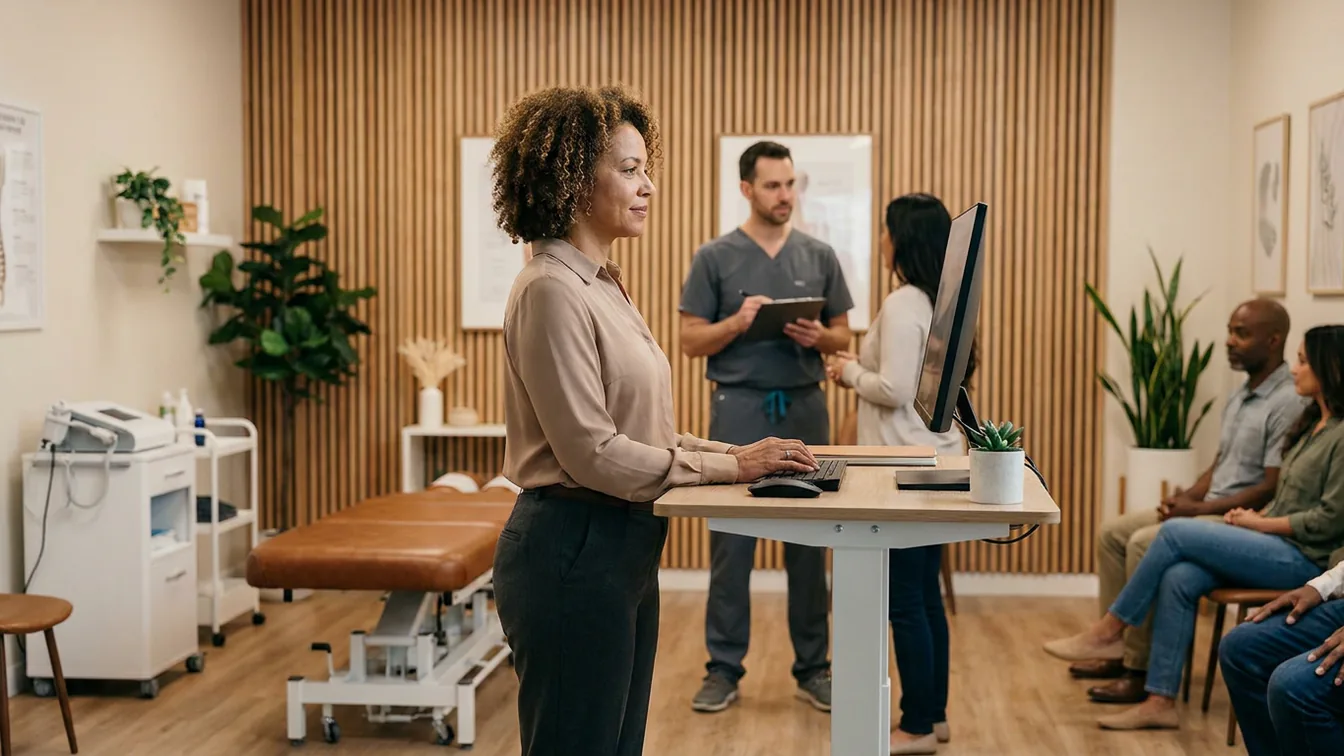
- Place your monitor at eye level, about an arm's length away.
- Keep your feet flat on the floor, with knees at roughly a 90-degree angle.
- Choose a chair that supports the natural curve of your lower back, or add a small rolled towel or lumbar cushion.
- Keep your elbows close to your body and bent at about 90 degrees while typing.
- Raise your phone to eye level when possible rather than bending your neck down.
2. Move Often
The best posture is your next posture. Even ideal sitting becomes tiring if you hold it for hours. Set a timer to stand, stretch, or walk for a minute or two every 30 to 45 minutes. A short lap around the office or a few shoulder rolls can reset your body and ease built-up tension.
3. Strengthen the Right Muscles
Posture correction is as much about strength as it is about awareness. Focus on the muscles that hold you upright:
- Wall angels: Stand with your back against a wall and slide your arms up and down like making a snow angel. Do 10 slow repetitions.
- Glute bridges: Lie on your back with knees bent and lift your hips. Hold for a few seconds and repeat 10 to 12 times.
- Planks: Hold a forearm plank for 20 to 30 seconds to build core stability.
- Rows: Using a resistance band, pull your elbows back and squeeze the shoulder blades together gently.
- Chin tucks: Gently draw your head straight back, as if making a double chin, and hold for five seconds. This helps counter forward head posture.
4. Stretch What Gets Tight
Tight muscles pull the body out of alignment. Add these gentle stretches to your routine:
- Doorway chest stretch: Place your forearms on a door frame and lean forward slightly. Hold for 30 seconds.
- Hip flexor stretch: Kneel on one knee, tuck your pelvis, and shift forward gently.
- Upper trapezius stretch: Tilt your ear toward your shoulder and hold lightly for 20 to 30 seconds per side.
- Cat-cow: On hands and knees, alternate arching and rounding your back to improve spinal mobility.
5. Build Body Awareness
Most people do not notice slouching until it hurts. Try checking in at regular moments, such as every time you take a drink of water or stop at a red light. Ask yourself: Are my shoulders relaxed? Is my head over my body? Am I breathing fully? Over time, these small check-ins create new habits.
6. Support Your Posture While You Rest
Sleep position matters too. Side sleepers can place a pillow between the knees, while back sleepers may benefit from a small pillow under the knees. Choose a pillow that keeps your neck in line with your spine rather than propping it up or letting it drop.
7. Stay Active Outdoors
Regular movement keeps muscles balanced and joints mobile. Walking is one of the easiest ways to encourage upright posture. Whether you stroll your neighborhood here in O'Fallon or take a weekend hike at Pere Marquette State Park, moving in nature gives your spine a break from the sitting position and helps you reset.
How Chiropractic Care Supports Lasting Posture Correction
Home habits are powerful, but sometimes they are not enough on their own. If you have followed good advice and still feel pain, stiffness, or a posture that does not seem to improve, there may be underlying issues in the way your spine and joints are functioning. This is where chiropractic care can make a meaningful difference.
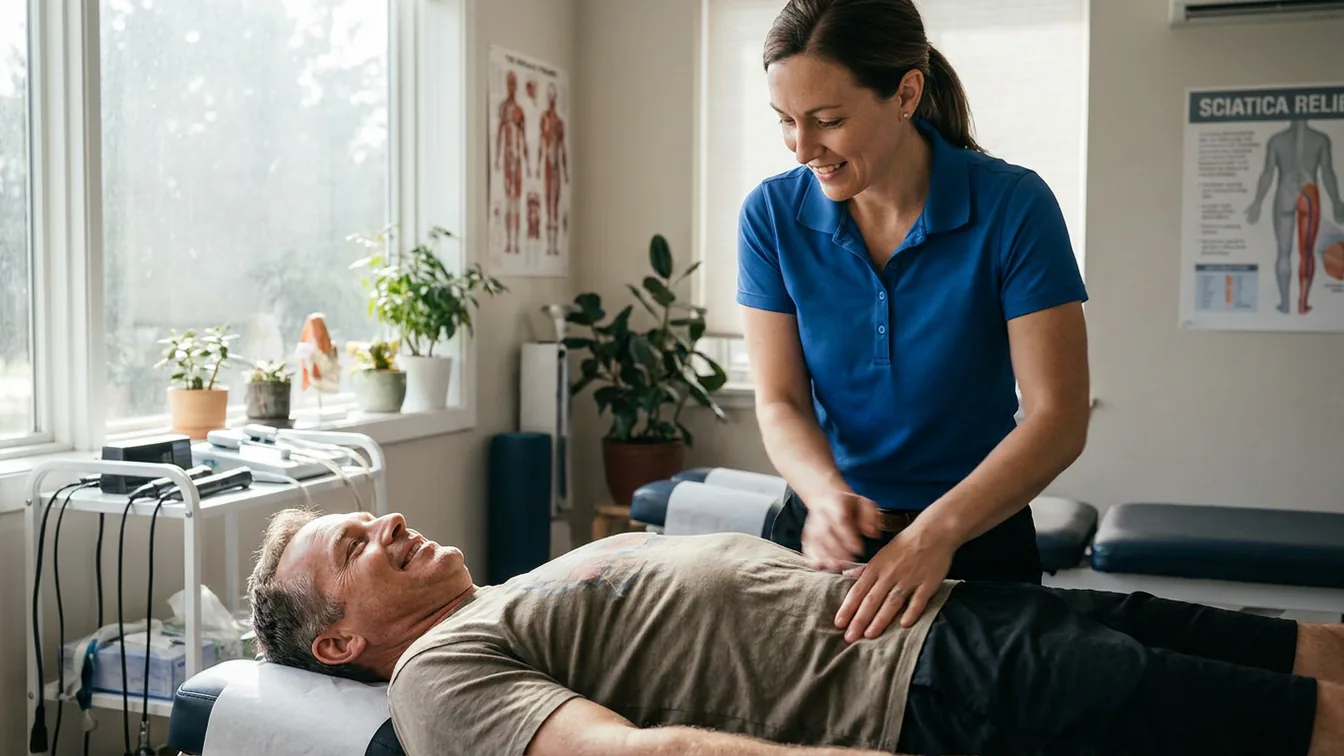
A chiropractor takes a whole-body approach to posture. Rather than focusing only on where it hurts, a thorough evaluation looks at how your spine, pelvis, shoulders, and movement patterns work together. Care may include:
- Postural and movement assessment to identify imbalances, restricted joints, and compensation patterns.
- Chiropractic adjustments to improve spinal mobility and joint function, which can make it easier for your body to hold healthier positions.
- Soft tissue techniques to address tight, overworked muscles.
- Targeted exercises and stretches tailored to your specific needs and lifestyle.
- Ergonomic and lifestyle guidance so your daily environment supports your progress.
Every person is different. A desk worker with neck pain needs a different plan than a parent who lifts children all day or someone recovering from an old injury. A personalized approach helps ensure that you are correcting the root causes of poor posture, not just masking the symptoms.
Patients often come to our O'Fallon clinic after months of living with nagging discomfort. Some have tried stretching videos or posture braces without lasting relief. Others simply want to prevent small aches from becoming bigger problems. Whether you live in Cahokia Heights, Alton, or right here in O'Fallon, getting a clear picture of what is happening in your body is a valuable first step.
When to Seek Professional Help
Consider scheduling an evaluation if you notice any of the following:
- Pain in the neck, shoulders, or back that lasts more than a couple of weeks
- Frequent tension headaches
- Numbness, tingling, or weakness in the arms or legs
- Visible changes, such as one shoulder sitting higher than the other or a head that sits well forward
- Difficulty standing or sitting comfortably for normal periods
- Pain that interferes with sleep or daily activities
If you ever experience sudden severe pain, loss of bladder or bowel control, or significant weakness, seek medical attention right away.
Be Patient With the Process
Posture did not change overnight, and it will not correct overnight either. Most people progress best by combining professional care, consistent exercises, and small daily adjustments. Celebrate the small wins, like getting through an afternoon with less tension or noticing you are sitting taller without trying. These signs show your body is adapting.
Take the Next Step Toward Better Posture
Understanding posture correction is the foundation, but taking action is what brings relief. Start with simple changes: adjust your workspace, move more often, add a few strengthening and stretching exercises, and pay attention to how you carry yourself. If discomfort persists or you want guidance tailored to your body, a professional evaluation can provide clarity and a clear path forward.
At Dr. Mukaia Lockett Chiropractic, we are committed to helping O'Fallon residents move better, feel better, and live with less pain through natural, patient-centered care. If you are ready to take the next step, we would be glad to meet you, listen to your concerns, and create a plan that fits your life.
Visit us at 2 Eagle Center Suite 1, O'Fallon, Illinois 62269 to schedule your visit. Your body has an amazing ability to adapt and heal, and the right support can help you stand tall with confidence.