If you're dealing with the debilitating pain of a herniated disc, you're not alone. Many O'Fallon residents wake up each morning wondering if today will be another day of shooting pain down their legs or aching in their lower back. The good news is that electrical muscle stimulation (EMS) has emerged as a promising, non-invasive treatment option that could provide the relief you've been searching for.
Living with a herniated disc can feel overwhelming, especially when traditional pain medications only offer temporary relief or come with unwanted side effects. Whether you're a farmer in our corn and soybean farming communities who needs to get back to physical work, or an office worker struggling to sit comfortably through meetings, understanding how electrical muscle stimulation works for herniated discs can open new doors to healing.
Understanding Herniated Discs and How They Affect Your Daily Life
A herniated disc occurs when the soft, gel-like center of a spinal disc pushes through a crack in the tougher exterior casing. This can happen anywhere along your spine, but it's most common in the lower back (lumbar spine) and neck (cervical spine). When this happens, the herniated material can press against nearby nerves, causing pain, numbness, or weakness that can radiate throughout your body.
For many people in O'Fallon, IL, the pain doesn't just stay in one place. You might feel sharp, shooting pain down your leg (called sciatica when it affects the sciatic nerve), numbness in your toes, or weakness that makes it difficult to lift objects or even walk normally. The pain can be particularly challenging for those whose work requires physical activity or long periods of sitting.
What makes herniated discs particularly frustrating is how they can affect your muscle function. When a disc herniates and irritates nearby nerves, it can cause the surrounding muscles to become weak, tight, or go into protective spasms. This creates a cycle where muscle dysfunction can actually make the disc problem worse, and the disc problem continues to affect muscle function.
Traditional treatments often focus primarily on managing pain through medications or preparing for surgery in severe cases. However, this approach doesn't always address the muscle dysfunction that accompanies herniated discs. This is where electrical muscle stimulation can play a valuable role in your recovery process.
How Electrical Muscle Stimulation Works for Herniated Disc Recovery
Electrical muscle stimulation uses controlled electrical impulses to activate muscle contractions, similar to the signals your nervous system sends naturally. When you have a herniated disc, these natural signals can become disrupted or weakened, leading to muscle atrophy, weakness, and poor coordination. EMS helps bridge this gap by providing the electrical stimulation needed to maintain and improve muscle function.
There are several ways electrical muscle stimulation can benefit someone with a herniated disc. First, it helps maintain muscle strength and mass in areas affected by nerve compression. When nerves are compressed or irritated by a herniated disc, the muscles they control may not receive adequate signals for proper function. EMS can provide supplemental stimulation to keep these muscles active and prevent the weakness that often accompanies disc problems.
Second, electrical stimulation can help reduce muscle spasms and tension that develop as a protective response to disc herniation. Many O'Fallon residents with herniated discs experience tight, painful muscle spasms in their back, hips, or legs. EMS can help relax these muscles by promoting better blood flow and encouraging natural muscle relaxation after the stimulated contractions.
Pain relief is another significant benefit of electrical muscle stimulation for herniated discs. The electrical impulses can help interrupt pain signals traveling to the brain, providing natural pain relief without medications. This is based on the gate control theory of pain, which suggests that non-painful electrical stimulation can effectively "close the gate" on pain signals.
Additionally, EMS promotes better circulation to the affected area. Improved blood flow brings essential nutrients and oxygen to damaged tissues while helping remove inflammatory substances that can worsen pain and slow healing. This enhanced circulation is particularly important for disc health, as discs have limited blood supply and rely heavily on movement and pressure changes for nutrition.
For athletes or active individuals in areas like Caseyville or O'Fallon who are eager to return to their activities, electrical muscle stimulation can be an excellent tool for rehabilitation. It allows you to begin strengthening and retraining muscles even when movement is limited by pain or when you're in the early stages of recovery.
Integrating EMS with Comprehensive Chiropractic Care
While electrical muscle stimulation can be highly effective for herniated disc symptoms, it works best when integrated into a comprehensive treatment approach. At Dr. Mukaia Lockett Chiropractic, patients discover that combining EMS with other therapeutic modalities creates a synergistic effect that addresses multiple aspects of disc-related problems.
Chiropractic adjustments help restore proper spinal alignment and movement, which can take pressure off herniated discs and allow them to heal more effectively. When combined with electrical muscle stimulation, these adjustments can be more effective because the muscles are better prepared to support the corrected spinal position.
Spinal decompression therapy is another treatment that pairs well with electrical muscle stimulation. Decompression helps create negative pressure within the disc, which can encourage herniated material to move back toward the center of the disc. EMS supports this process by ensuring that the muscles supporting the spine are strong and coordinated enough to maintain the benefits of decompression treatment.
Manual therapy and targeted exercises are also crucial components of herniated disc treatment. Electrical muscle stimulation can make these interventions more effective by improving muscle activation and reducing pain that might otherwise limit your ability to participate fully in therapeutic exercises.
Many patients in O'Fallon, Illinois find that this multi-modal approach not only provides faster relief but also helps prevent future disc problems. By addressing both the structural issues (through adjustments and decompression) and the functional problems (through EMS and exercise), you're more likely to achieve lasting recovery.
It's important to understand that electrical muscle stimulation isn't a magic cure, but rather a valuable tool in your recovery toolkit. The frequency and duration of EMS treatments will depend on your specific condition, overall health, and how your body responds to treatment. Some people notice improvements after just a few sessions, while others may need several weeks of consistent treatment to achieve optimal results.
What to Expect During EMS Treatment and Beyond
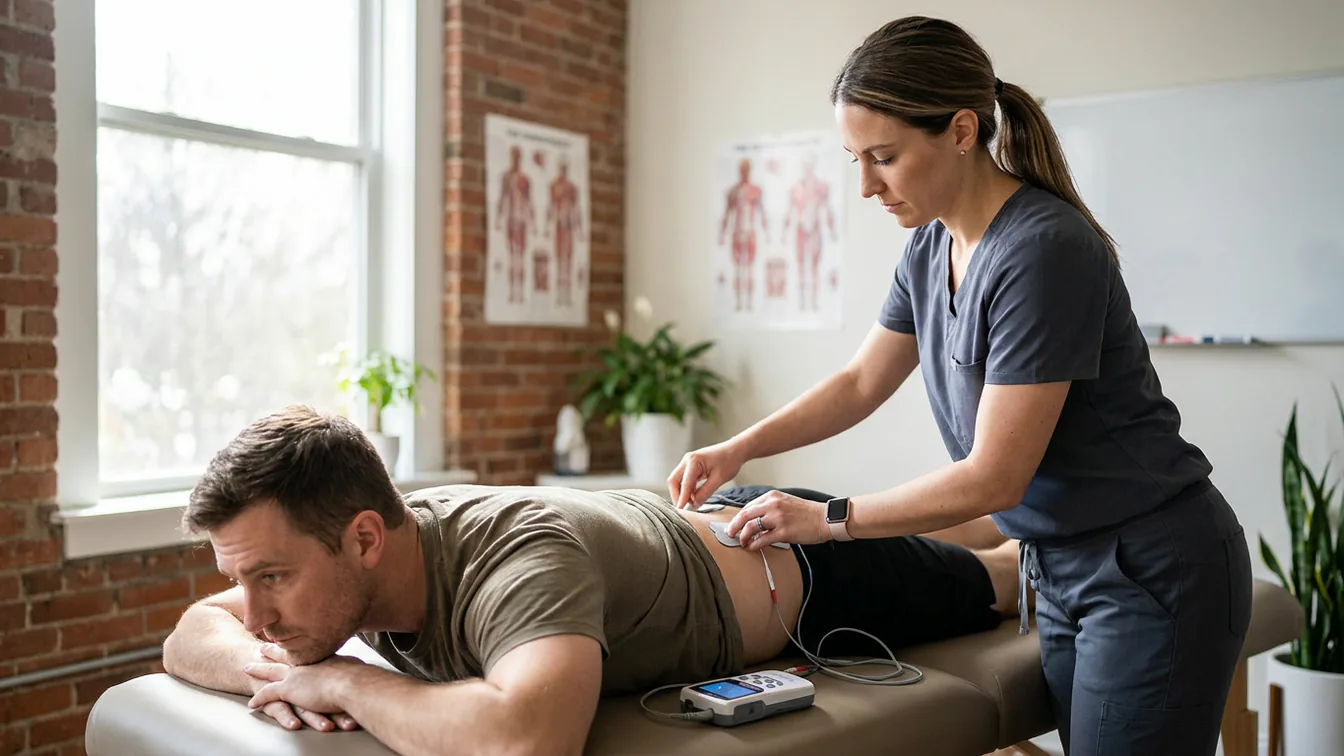
If you're considering electrical muscle stimulation for your herniated disc, knowing what to expect can help you feel more confident about the process. During an EMS session, small electrodes are placed on your skin over the affected muscles. These electrodes are connected to a device that delivers controlled electrical impulses. Most people describe the sensation as a tingling or pulsing feeling, and the intensity can be adjusted to ensure your comfort.
Treatment sessions typically last between 15 to 30 minutes, depending on the specific protocol recommended for your condition. You might receive EMS treatment several times per week initially, with the frequency gradually decreasing as your symptoms improve and your muscle function returns to normal.
It's normal to feel some muscle fatigue after EMS treatment, similar to what you might experience after a workout. This is actually a positive sign that the treatment is effectively activating your muscles. However, you shouldn't experience increased pain or severe discomfort. If you do, it's important to communicate this with your healthcare provider so adjustments can be made to your treatment protocol.
As you progress through treatment, you should notice gradual improvements in pain levels, muscle strength, and overall function. Many patients report sleeping better, having less morning stiffness, and being able to perform daily activities with greater ease. Whether you work near Edwardsville High School or live in the surrounding communities, these improvements can significantly impact your quality of life and ability to participate in work and recreational activities.
Long-term success with herniated disc treatment often depends on your commitment to the full treatment plan and any home care recommendations. This might include specific exercises, posture modifications, ergonomic improvements, and lifestyle changes that support spinal health.
Prevention is also a crucial aspect of herniated disc care. Once you've experienced relief from electrical muscle stimulation and other treatments, maintaining good muscle strength and spinal health becomes essential for preventing future problems. Your healthcare provider can guide you in developing a maintenance program that keeps your muscles strong and your spine healthy.
If you're struggling with herniated disc pain and wondering whether electrical muscle stimulation might help you, don't wait to explore your options. The sooner you address both the symptoms and underlying muscle dysfunction associated with herniated discs, the better your chances of achieving complete recovery. The team at Dr. Mukaia Lockett Chiropractic at 2 Eagle Center Suite 1, O'Fallon, Illinois 62269 is here to evaluate your specific condition and determine whether EMS therapy could be an effective part of your personalized treatment plan. Take the first step toward reclaiming your life from herniated disc pain by scheduling a consultation today.